Thursday, November 30, 2006
May I Have This Dance?
Cocktail parties are more about chatting and laughter than settling in for dense conversation. The best music will be like a favorite guest: lively, witty, upbeat and, as the evening goes on, ready to dance. (Article, Washington Post).


Wednesday, November 29, 2006
Quotable Similes, Part 2
Technological progress is like an axe in the hands of a pathological criminal.
(Albert Einstein).
Politics are very much like war. We may even have to use poison gas at times. (Winston Churchill).
My books are like water; those of the great geniuses are wine. (Fortunately) everybody drinks water. (Mark Twain).
As crazy as hauling timber into the woods. (Horace).
Venice is like eating an entire box of chocolate liqueurs in one go. (Truman Capote).
Skepticism, like chastity, should not be relinquished too readily. (George Santayana).
For Saddam, Bring on the Holy Water
[On a Saddam Hussein execution]. But this still seems to me to be more like an exorcism than an execution — a concession to superstition and primitive emotion. (Christopher Hitchens on Slate).
Tuesday, November 28, 2006
Mob Scene at the Republican Caucus

“When Lyndon Johnson became Vice-President, he wasn’t welcome at Senate Democratic caucus meetings anymore, because it was for senators only,” Patrick Leahy, the ranking Democrat on the Judiciary Committee, told me. “But every Tuesday since Bush has been President it’s been like a Mafia funeral around here. There are, like, fifteen cars with lights and sirens, and Cheney and Karl Rove come to the Republican caucus meetings and tell those guys what to do. It’s all ‘Yes, sir, yes, sir.’ (Jeffrey Toobin in the New Yorker).
While no doubt convinced that Iraq had at least some chemical and biological weapons, Bush administration officials, like the cop framing a guilty man, vastly exaggerated the evidence. (Mark Danner in book review, New York Review of Books).
“The Echo Maker” is probably the best Powers novel so far. I say "probably," because it's not possible for Powers to write an uninteresting book, and after that it's a matter of taste. Trying to describe it is a bit like four blind men trying to describe an elephant—which end do you start at, with something so large and multi-limbed? (Margaret Atwood, in New York Review of Books on new Richard Powers book).
You stagger out of Powers's novel happy to find yourself, like Scrooge the morning after, grasping your own bedpost, saying "There's no place like home," and hoping you still have a chance to set things right. (Margaret Atwood).
Monday, November 27, 2006
Gandhi, the Lone Ranger & the Mob in Iraq
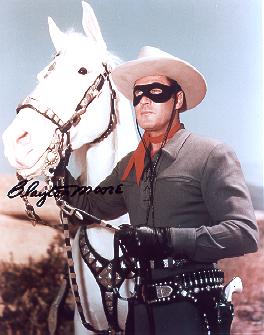
Time's cover headline referring to President George W. Bush as "The Lone Ranger" [Nov. 6] was like calling Donald Rumsfeld Mahatma Gandhi. Don't you know your pop-culture history? The Lone Ranger was a gallant man who helped people in distress. He then rode away, not waiting for accolades. The only thing Bush has in common with the Lone Ranger is that he is from Texas. (Letter to Time magazine).
Large numbers of impoverished Shiites view Sadr as their guardian — the one leader who is willing not just to stand up for them but to strike back on their behalf. "People count on the militias," says Lieutenant Hartley, who deals with Sadr's thugs on a regular basis. "It's like the mob — they keep people safe." (The Most Dangerous Man in Iraq, Newsweek).
Contagious Shooting and the Sizzle of Bacon
It is known in police parlance as "contagious shooting" -- gunfire that spreads among officers who believe that they, or their colleagues, are facing a threat. It spreads like germs, like laughter, or fear. (50 Shots Fired, And the Experts Offer a Theory, today's New York Times).
Off a bleak and empty interchange midway through the Dallas sprawl stands a Burger King. It's past midnight, the rain sizzles on the parking lot blacktop like frying bacon. (American Album, today's New York Times).
Off a bleak and empty interchange midway through the Dallas sprawl stands a Burger King. It's past midnight, the rain sizzles on the parking lot blacktop like frying bacon. (American Album, today's New York Times).
Saturday, November 25, 2006
The White House Chief of Denial

[Tony] Snow has said this is not a civil war because the fighting is not taking place in every province and because Iraqis voted in free elections. But that's like saying that the Battle of Gettysburg only took place in one small corner of the country, so there was no real American Civil War. And there were elections during our civil war too. (Maureen Dowd, The New York Times).
Friday, November 24, 2006
The Smell of Gold, the Fear of Sleep
Similes on the Big Screen, Take 3:
Believe it or not, I knew a fellow once who could smell gold like a jackass can smell water. (Howard, “Treasure of the Sierra Madre,” 1948)
I can't sleep any more. It's too much like death. (Cosmo, “Moonstruck,” 1987)
An artist without freedom is like a bird without wings.(Anatoly, “Moscow on the Hudson,” 1984)
He spurned me like a strumpet in the street. (Nefretiri, “The Ten Commandments,” 1956)
You know what I feel like? I feel all the time like a cat on a hot tin roof. (Margaret, “Cat on a Hot Tin Roof,” 1958)
From “The Cat in the Hat,” (2003):
Conrad: I'm not going to military school.
Lawrence Quinn: Oh, I think you're gonna love it! It's just like summer camp, except with brutal forced marches and soul-crushing discipline.
The Cat: Wow! This is just like the carnival, just without the abused animals and the drunken clowns with hepatitis.
Wednesday, November 22, 2006
Thanksgiving Evokes the Pistons, the Oscars, Theater, the Godfather -- and Auschwitz
My house on Thanksgiving is like a Pistons game with pie. (David Letterman quoted on ESPN.com).
Thanksgiving is like Oscar night. [Time to thank all the little people.] (Posting on Davenet).
"Thanksgiving is like theater,'' says Jerry Gulley, editor-in-chief of the allrecipes.com Web site. (Article in Houston Chronicle).
Thanksgiving is like watching an episode of the Godfather. I’m afraid to take the last piece of turkey because I might wake up with a horse's head in bed with me. (Article in Texas newspaper).
My husband believed that "Native Americans celebrating Thanksgiving is like Jews celebrating Auschwitz." (Post on Chicago Bears site), presumably by a Native American.
Tuesday, November 21, 2006
America's Watery Pompeii

John Updike, The New York Review of Books, on “New Orleans After the Flood,” a collection of remarkable photographs by Robert Polidori, and the related exhibition at the Metropolitan, through Dec. 10:
Toppled live oaks lay like fallen colossi, except there was no grandeur to the scene, just despair. (Quoting from Jeff L. Rosenheim's introduction to the book).
In New Orleans, he dealt not with invisible radioactivity but with a city like, he has said in an interview, "a decomposing body"; photographs taken six months after the hurricane still show scant signs of cleanup, reclamation, and recovery. (Updike)
Automobiles, those stolid American necessities, turn out to be susceptible and rather comically buoyant in a flood; the second photo, 2600 Block of Munster Boulevard, captures two of them with their rear ends elevated, like a pair of saucy chorus girls, in a row of brick bungalows. (Updike)
Even the bleakest of the shelters that caught the photographer's attention — the single-story shack on Tupelo Street, for instance, a missing wall baring a bright closetful of abandoned clothes; or the wrecked salmon-colored cabin at Law and Tupelo Streets; or the grimly simple bedroom on presciently named Flood Street, with its careening mattress and ceiling fan wilted like a Dalì timepiece — hold bits of decorative art and vibrations of life, cut off as suddenly as occupancies at Pompeii. (Updike)
Heaped onto the street and sidewalk are tons of the flimsy stuff of American housing—fiberglass insulation like poisonous cotton candy; sheets of warped plywood; mock-pine pressed sheathing; pulverized plasterboard; aluminum siding splayed like palm fronds as houses floated and twisted; strips of metal and molding; plastic-covered shelves and countertops; shower curtains and mattresses, downspouts and lawnmowers, air conditioners and refrigerators mired in a state of eternal paralysis. (Updike)
Monday, November 20, 2006
Prophecy & Reality
2003: O.J. Simpson is like one of those trick birthday candles – every time you think he’s gone out, he flames up again. (From GreaterBoston.tv from 2003).
2006: O.J. Simpson is like a pesky bug — he just doesn’t go away and doesn’t know when to stop too. (Nov.16th post on The Foo Logs blog).
The Obama Souffle

Obama is like a Grand Marnier soufflé still rising in the oven. It will taste delicious when it's finished, but it's not there yet. (An anonymous supporter of Hillary Clinton quoted in Newsweek).
Saturday, November 18, 2006
For the New Bond, Full-Action Similes

A simile-studded New Yorker review
of “Casino Royale” by Anthony Lane:
Who said this: “It is interesting for me to see this new Bond. Englishmen are so odd. They are like a nest of Chinese boxes. It takes a very long time to get to the center of them. When one gets there the result is unrewarding, but the process is instructive and entertaining.” The speaker is Mathis, a kindly French liaison officer in “Casino Royale,” Ian Fleming’s first James Bond novel, published in 1953.
And …
It is true that Bond keeps a defibrillator in the glove compartment of his Aston Martin, but, given the cholesterol levels of the kind of people who drive Aston Martins, a heart-starter presumably comes standard, like a wheel jack.
And …
His head is a rough cube, sawed and sanded, with the blue eyes hammered in like nail heads. [About Daniel Craig, the new Bond].
And ...
He could beat a man’s brains out with his brow. That suits the Bond of “Casino Royale,” who has only lately acquired his license to kill, and, like a kid who’s just passed his driving test, is eager to step on the gas.
And …
This chase goes on far longer than expected, like a theological discussion in a Bergman film, with both the fleeing baddie and the pursuant Bond careening off walls and cranes and anything else that juts into their path.
One City Forgets, Another Tries to Remember

“Los Angeles is such a rapidly evolving city,” said Joel Kotkin, an urban historian who has lived [there] for 30 years. “There is an enormous turnover of people here,” Mr. Klotkin said. “You talk to people here about the ‘80s here, and it’s like you are talking about the Conquistadors. It is a place where people go on with their lives. O.J. was part of the L.A. shtick, and now it is gone.” (About the fading imprint of O.J. Simpson on the city, New York Times).
“A city is like a human being,” said [Vietnamese architect Nguyen Van] Tat. “It needs to have a past. There is a saying in Vietnam that even if the pages are frayed, a book must still have its spine.” (Article on booming development in Ho Chi Minh City, New York Times).
Friday, November 17, 2006
An Anthill, 2 Taxis & a Simile-Conscious Psycho

Similes on the Big Screen, Take 2
From Hitchcock:
He says that San Francisco's like an anthill up the foot of a bridge. (Cathy Brenner, “The Birds,” 1963)
When two people love each other, they come together – wham – like two taxis on Broadway. (Stella, “Rear Window,” 1954)
She's like a queen bee with her pick of the drones. (Jeff, “Rear Window”)
Sometimes the truth does taste like a mouthful of worms. (Leonard, “North by Northwest,” 1959
Dialog from “Psycho,” 1960:
Norman Bates: You - you eat like a bird.
Marion Crane: [Looking around at the stuffed birds while eating] And you'd know, of course.
Norman Bates: No, not really. Anyway, I hear the expression 'eats like a bird' - it-it's really a false-false-false-falsity. Because birds really eat a tremendous lot. But I - I don't really know anything about birds. My hobby is stuffing things. You know, taxidermy.
And…
Norman [thinking as his mother]: He was always bad and in the end he intended to tell them I killed those girls and that man, as if I could do anything but just sit and stare like one of his stuffed birds.
Thursday, November 16, 2006
Quotable Similes, Part 1

Some bon mots from BrainyQuote.com:
Well, I'm about as tall as a shotgun, and just as noisy. (Truman Capote)
Guests, like fish, begin to smell after three days. (Benjamin Franklin)
Inflation is as violent as a mugger, as frightening as an armed robber and as deadly as a hit man. (Ronald Reagan)
Love is like war: easy to begin but very hard to stop. (H.L. Mencken)
The happiest women, like the happiest nations, have no history. (George Eliot)
Wednesday, November 15, 2006
Thinking About Outsourcing? Get a Pre-Nup
Outsourcing is like marriage: You're in it for life -- at least you should be. Getting out is costly and wrought with devastating disappointment and contractual chaos. (Article on SearchCio web site).
Flight Risk

Senator Joseph I. Lieberman strode into a Democratic caucus gathering like he owned the place or, at the very least, like someone who is a flight risk and could leave at any minute, taking the Democrats’ new majority with him. (New York Times, page one).
And, for Your Entree?

That's like Jeffrey Dahmer eating your kid. [A rather eccentric pigeon lover about dining on squab.] (New York Times book review of "Pigeons: The Fascinating Saga of the World's Most Revered and Reviled Bird" -- complete with a recipe for pigeon pot pie).
Tuesday, November 14, 2006
Similes on the Big Screen, Take 1

From Woody Allen:
A relationship, I think, is like a shark. You know? It has to constantly move forward or it dies. And I think what we got on our hands is a dead shark. (Alvy Singer in “Annie Hall,” 1977).
Alvy, you're incapable of enjoying life, you know that? I mean you're like New York City. You're just this person. You're like this island unto yourself. (Annie Hall in “Annie Hall”).
You, you, you're like New York: Jewish, left-wing, liberal, intellectual, Central Park West, Brandeis University, the socialist summer camps and the, the father with the Ben Shahn drawings, right, and the really, y'know, strike-oriented kind of, red diaper, stop me before I make a complete imbecile of myself. (Alvy Singer in “Annie Hall”).
You stand on the brink of greatness. The world will open to you like an oyster. No... not like an oyster. The world will open to you like a magnificent vagina. (Helen Sinclair in “Bullets Over Broadway,” 1994)
He’s an American phenomenon (Halley Reed). Yeah, like acid rain (Clifford Stern). (“Crimes and Misdemeanors,” 1989)
[About life] It's like Vegas. You're up, you're down, but in the end the house always wins. Doesn't mean you didn't have fun. (The Devil in “Deconstructing Harry,” 1997)
It's an interesting group of people, your friends are … Like the cast of a Fellini movie. (Isaac Davis in “Manhattan,” 1979).
[About a Jackson Pollack painting] It restates the negativeness of the universe. The hideous lonely emptiness of existence. Nothingness. The predicament of Man forced to live in a barren, Godless eternity like a tiny flame flickering in an immense void with nothing but waste, horror and degradation, forming a useless bleak straitjacket in a black absurd cosmos. (Museum Girl in “Play It Again, Sam,” 1972)
You can't learn to be real. It's like learning to be a midget. (Tom Baxter in “The Purple Rose of Cairo,” 1985).
Subscribe to:
Posts (Atom)